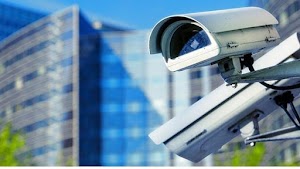

Safeguarding employees, customers, and assets across busy bank branches requires a proactive approach to security. Surveillance Technology offers state-of-the-art bank security camera systems tailored to the unique needs of financial institutions. Our expert team will work closely with you to design a comprehensive surveillance solution that enhances safety and deters criminal activity.
Customized Bank Security Camera Placement
Our experienced technicians conduct thorough site assessments to identify vulnerable areas within your bank’s interior and exterior spaces. We strategically position ultra-high-definition cameras to provide optimal coverage of lobbies, teller lines, ATM zones, vaults, and other sensitive locations. By carefully selecting camera placements, we ensure that every critical area is monitored while maintaining a discreet and professional appearance.
Advanced Camera Technology for Clear Footage
Surveillance Technology utilizes cutting-edge camera technology to deliver superior image quality, even in challenging lighting conditions. Our bank security cameras feature ultra-high-definition (UHD) resolution, ensuring that every detail is captured with exceptional clarity. With advanced low-light capabilities and wide dynamic range (WDR) technology, our cameras provide clear footage around the clock, aiding in incident investigation and evidence gathering.
Integrated Access Control for Enhanced Security
In addition to video surveillance, Surveillance Technology offers integrated access control solutions to fortify your bank’s security further. By implementing badge readers, PIN codes, Bluetooth or biometric authentication at entry points, you can restrict unauthorized access to sensitive areas such as vaults, back offices, and data centers. Our unified platform allows you to manage and monitor access privileges, ensuring that only authorized personnel can enter restricted zones.
Real-Time Monitoring and Alerts
With Surveillance Technology’s bank security camera systems, security personnel can monitor live feeds from a centralized control room or remotely via secure mobile devices. Our intelligent video analytics software can detect suspicious activities, such as loitering or unusual behavior, and generate real-time alerts. This proactive approach enables security staff to respond promptly to potential threats, minimizing risks and enhancing overall safety.
Scalable and Future-Proof Solutions
As your bank grows and evolves, Surveillance Technology’s security camera systems can scale seamlessly to meet your changing needs. Our modular design allows for easy expansion and upgrades, ensuring that your security infrastructure remains up-to-date and effective. We also provide ongoing maintenance and support services to keep your system running smoothly and address any issues promptly.
Partner with Surveillance Technology
When it comes to securing your bank, trust the experts at Surveillance Technology. With years of experience in the financial sector, we understand the unique challenges banks face and develop customized bank security camera solutions to address them. Our commitment to quality, reliability, and customer satisfaction sets us apart as a trusted partner in bank security.
Enhance the safety and security of your bank with Surveillance Technology’s advanced bank surveillance camera systems. Contact us today to schedule a consultation and take the first step towards a more secure future for your financial institution.
We deliver surveillance technology and secure access systems to financial institutions in Tampa and surrounding cities:
Central Bank-St Augustine & Winter Park – Winter Park Security Solutions
Central Bank Tampa– Security and Surveillance System Tampa
First National Bank of Mt Dora – Mt. Dora Surveillance System
First National Bank of Mt Dora -Phase 2 – Access Control Mt. Dora
First National Bank of Mount Dora Phase 3 – Surveillance Equipment Mount Dora
Financial institutions face some of the strictest security requirements in any industry. Watch how our team designs and installs access control systems that help Tampa Bay banks protect branch entry points and employee-only areas.
Frequently Asked Questions
Why do banks need commercial-grade surveillance systems instead of alarm company video?
Banks often make a critical security error by relying on alarm company video surveillance, which typically records at only 1-2 frames per second until an alarm is triggered. This low frame rate means they miss crucial footage of people casing the location beforehand – observing security measures, employee routines, and customer patterns. Professional commercial surveillance systems record continuously at high frame rates (30 frames per second), capturing every detail of suspicious behavior before an incident occurs. This continuous high-quality recording provides law enforcement with complete documentation of the entire timeline, not just the moment an alarm triggers. Commercial-grade systems also offer superior image quality, reliable storage with proper retention periods, and remote monitoring capabilities that alarm company systems cannot match.
What are the most common camera placement mistakes banks make?
The most critical oversight banks make is failing to install exterior cameras. Banks commonly miss opportunities to capture footage of suspects before they enter the building – whether they’re casing the location, preparing weapons, or coordinating with accomplices in vehicles. Exterior cameras should cover parking areas, building perimeters, ATM locations, and all approach paths to entrances. Interior placement mistakes include cameras positioned too high to capture clear facial details, inadequate coverage at teller windows that miss transaction details, and blind spots in customer service areas where threats could develop. Every camera should record at 20 to 30 frames per second to capture clear images of fast-moving situations, and cameras must be positioned to capture faces clearly rather than just the tops of heads.
What access control features do banks need?
Banks require multi-layered access control systems that create secure zones within the building. Employee-only areas, vault access, cash handling rooms, server rooms, and executive offices should all have separate access levels with detailed logging. Access control systems should track not just who accessed an area but also the time and duration of access. Integration with surveillance cameras provides visual verification of access events, confirming that the person using credentials is authorized. Modern systems support time-based restrictions preventing access to sensitive areas during non-business hours except for specifically authorized personnel, and systems can trigger alerts when unusual access patterns occur such as vault access outside normal times.
How should banks position cameras to capture usable evidence during robberies?
Banks need strategic camera positioning that captures high-quality evidence during robbery situations. Cameras at each teller window should be positioned to capture clear facial images of customers at counter height, positioned at angles that show both the teller and customer simultaneously. Entry door cameras should capture faces as people enter, not just the backs of heads as they leave. Cameras should be positioned throughout the lobby to provide multiple angles of any incident. ATM areas need cameras showing both the person using the machine and the keypad area. All cameras must record at 20 to 30 frames per second to capture clear images during fast-moving robberies. Professional positioning ensures footage is usable for law enforcement identification and prosecution rather than simply documenting that an incident occurred.
What exterior camera coverage do banks need?
Banks need comprehensive exterior camera coverage that many institutions currently lack. Cameras should monitor all parking areas with angles that capture license plates of vehicles entering and leaving, provide coverage of anyone approaching the building from any direction including side and rear entrances, monitor ATM locations from multiple angles including showing anyone waiting nearby, and capture activity at drive-through lanes if applicable. Use 24/7 color cameras rather than traditional night vision for better vehicle and suspect identification. Exterior cameras should begin recording suspicious behavior before it becomes a crime – people surveilling the bank, conducting counter-surveillance, or preparing in vehicles. This footage is invaluable for law enforcement and often shows accomplices or getaway vehicles that interior cameras never capture.
How can banks use surveillance to identify internal theft?
Banks face significant risk from internal theft by employees who understand security measures and customer patterns. Strategic camera placement helps identify internal theft through cameras positioned to see transaction screens and cash handling at teller windows simultaneously, vault cameras that document who accesses cash and when, cash counting room coverage showing complete cash handling procedures, and cameras in employee-only areas including break rooms where stolen cash might be concealed. Systems should retain footage for extended periods (30-60 days) since internal theft often isn’t discovered immediately. High frame rates capture quick hand movements during transactions that might indicate skimming or theft. Regular review of footage from cash-handling areas helps identify suspicious patterns before losses become substantial.
Should banks use CCTV or IP camera systems?
Banks can benefit from either CCTV or IP camera systems depending on their specific needs and infrastructure. CCTV systems offer several advantages for banks including lower cost, inherent security since cameras cannot be accessed directly over the internet (each camera connects directly to the DVR), no impact on network bandwidth, and very stable operation that continues recording even if the network goes down. CCTV systems now support resolutions up to 4K but can only record at 10 frames per second at that resolution. IP systems offer higher maximum frame rates and advanced analytics like human detection, but cost significantly more and may utilize network bandwidth. For most banks, investing in an IP surveillance system to provide the reliability, security, frame rate and image quality needed for effective surveillance is essential.
How does bank surveillance integrate with alarm systems?
Bank surveillance systems should operate independently from alarm systems rather than relying on alarm triggers to begin quality recording. While alarm systems serve an important purpose for intrusion detection and emergency response, surveillance systems must record continuously at high frame rates regardless of alarm status. This integration approach ensures surveillance captures people casing the location before alarms trigger, documents normal daily operations that might reveal security weaknesses, and provides continuous evidence rather than gaps in coverage. Modern systems can coordinate with alarms by automatically flagging footage when alarms trigger for easy review, but the surveillance system itself should never depend on the alarm system to function properly. This independence ensures banks capture complete documentation of all security-relevant activity.